BLOG #2
This week in EDCI 335, we dove into the “how” of building a learning experience, and it’s changed how I look at my own education. It’s the difference between a class you forget the moment it’s over and one that sticks with you for years. It turns out, that difference isn’t an accident; it’s all about design.
Backward Design
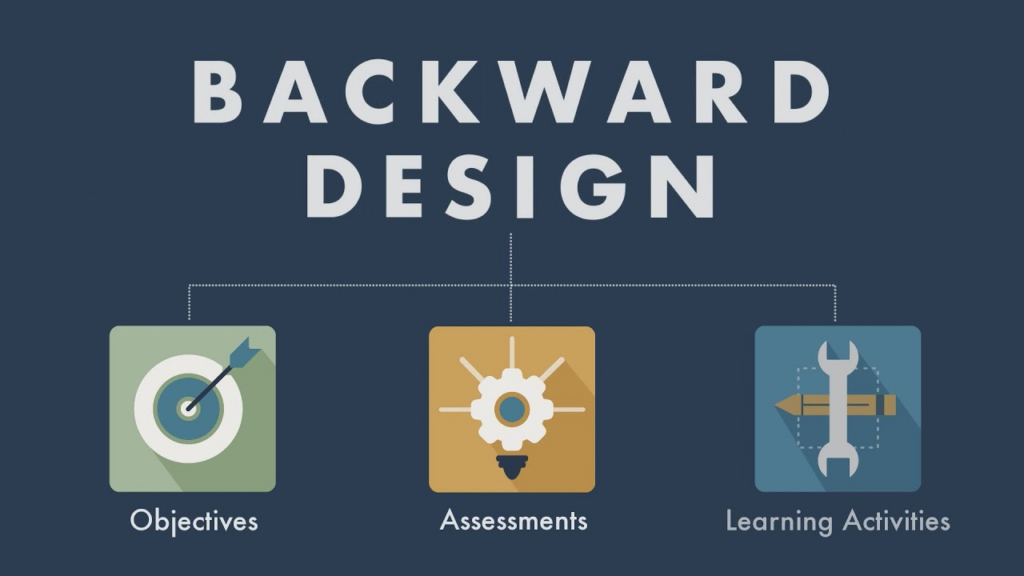
Backward Design is an approach where you start with the end goals in mind first, then plan your lessons and activities to lead to that outcome. For me, this idea just makes sense. You wouldn’t start building a program without knowing what you want it to do. I remember a programming course where the professor gave us the final project specs on the first day: build a functioning e-commerce checkout system. Suddenly, every lecture on variables and databases had a clear purpose. We weren’t just learning abstract concepts; we were collecting the tools we needed to build our final project.
Design Thinking
This is where empathy comes in, and it’s a huge deal in my field. Design Thinking reminds us to focus on the person we’re designing for. I saw this firsthand during a hackathon. My team spent hours building what we thought was a brilliant app. But when we showed a rough prototype to a few potential users, we got a reality check. They found it confusing and pointed out a major problem we had completely missed. That early feedback was crucial. We iterated, simplified, and ended up with a much better product because we stopped assuming and started listening.
Learning Outcomes & Taxonomies
Learning outcomes are clear statements describing what a student should be able to do after a lesson. They are a key part of designing backward because they define your target. For an outcome to be strong, it has to be specific and measurable. For example, a weak outcome is, “Students will know about Python loops,” while a strong one is, “Students will be able to write a script that uses a ‘for’ loop to process data from a file.”
To classify these outcomes, taxonomies like Bloom’s or SOLO are used. I find SOLO more intuitive, as it feels like a natural journey from knowing nothing to creating new ideas with the knowledge.
If you’re curious about the different levels of learning, the University of Waterloo has a great resource:
https://uwaterloo.ca/centre-for-teaching-excellence/catalogs/tip-sheets/blooms-taxonomy
Surface vs. Deep Learning
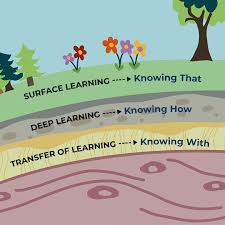
I’ve definitely experienced both. Surface learning was my first-year calculus class, where I crammed formulas just to pass the multiple-choice final. I couldn’t tell you how to solve those problems now. That was surface learning.
In contrast, my database management course was deep learning. The final was a massive project where we had to design and build a complete database for a real-world scenario. It was way harder, but I had to apply everything I learned. The course’s design, centered on a project instead of a test, made all the difference in what I retained.
Inquiry & Project-Based Learning
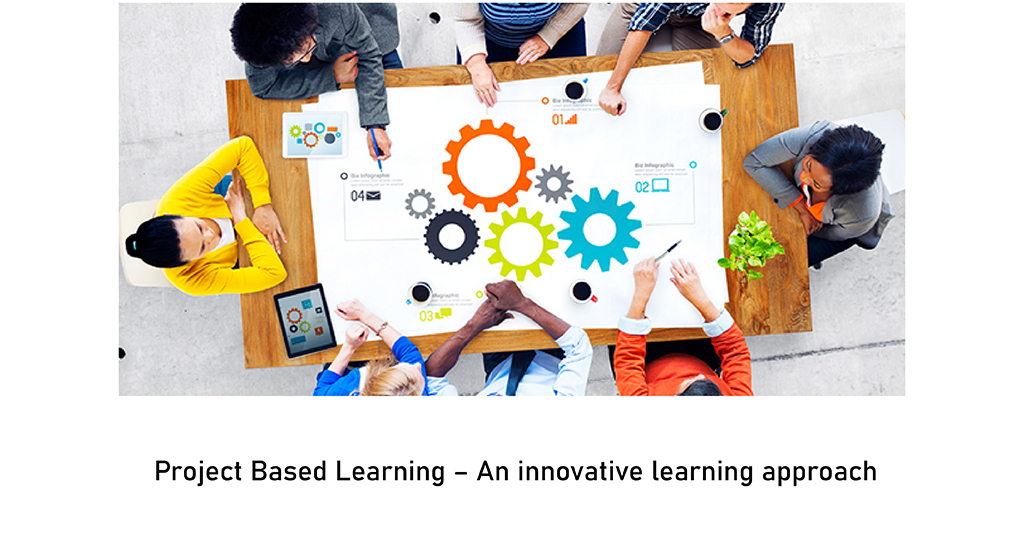
As a computer science student, almost my entire education feels like Project-Based Learning (PBL). We’re constantly given problems and have to figure out how to build a solution. The main benefit is that it’s an authentic way to learn skills you’ll actually use in a job. The biggest challenge? It can be messy and ambiguous. There isn’t always a clear “right” answer, and you have to learn to manage your time and navigate uncertainty, which is a valuable skill in itself.